
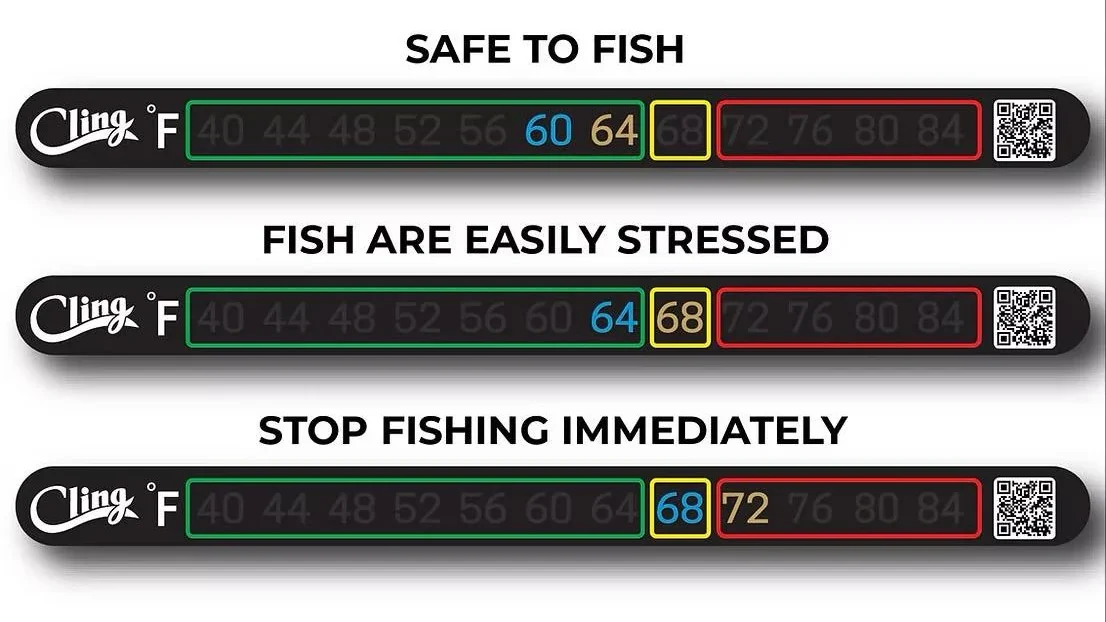
Know When to Fish, When to Stop, and When to Switch Species
Cold water = Strong habitat = Healthy trout.
Water temperature is one of the most important factors affecting trout health and survival. As water warms, trout experience increasing physiological stress and have a harder time recovering from the demands of being caught and released.
For anglers, one simple habit can make a difference:
CHECK THE WATER TEMPERATURE BEFORE YOU FISH.
And when trout water gets too warm, you don’t have to stop fishing—just change target species, like Bluegill, Bass and Pike!
Know Your Trout Temperature Limits
Trout Water Temperature Guide
| Trout Species | Optimal Range | Feeding Range | Stress Begins | Lethal Limit* |
|---|---|---|---|---|
| Brook Trout | 55–60°F | 44–64°F | Above 65°F | 70–75°F |
| Rainbow Trout | 55–62°F | 44–67°F | 68–70°F | Above 73°F |
| Brown Trout | 53–66°F | 54–60°F | 70°F | Approaches 78°F |
*Temperature limits are general conservation guidelines, not absolute biological thresholds. Thermal tolerance varies with acclimation, dissolved oxygen, flow, fish condition, life stage, duration of exposure, and local conditions. Published USGS material identifies optimal temperatures around 55–60°F for brook and rainbow trout and approximately 60–65°F for brown trout, while reported upper tolerance levels vary across species and studies.
Brook Trout
Most Sensitive
Brook trout are particularly dependent on cold-water habitat. They are a coldwater-adapted species whose distribution and abundance can be strongly influenced by stream temperature.
Temperature Guide
Optimal Range: 55–60°F
Feeding Range: 44–64°F
Stress Begins: Above 65°F
Lethal Limit: 70–75°F
Research has found that physiological stress responses in brook trout correspond closely with temperatures around 70°F, reinforcing the importance of avoiding prolonged exposure to very warm water.
When water reaches 65°F
Give brook trout a break.
Consider moving to colder water, fishing for another species, or putting the trout rod away.
Look for:
- Spring seeps
- Cold tributaries
- Groundwater inputs
- Higher-elevation streams
- Heavily shaded water
- Deep thermal refuges
Do not wait for water to reach a lethal temperature before changing your fishing plans.
Rainbow Trout
Cold-Water Species
Rainbow trout also depend on cool, well-oxygenated water. Water temperature can become especially important when combined with the additional physiological stress caused by hooking, fighting, and handling fish.
Temperature Guide
Optimal Range: 55–62°F
Feeding Range: 44–67°F
Stress Begins: Above 68–70°F
Lethal Limit: Above 73°F
When water reaches 68–70°F
Give rainbow trout a break.
Move to colder water or switch to a species better suited to warmer conditions.
As with all trout, don’t use the lethal temperature as your fishing target. The conservation goal is to avoid creating unnecessary stress before fish reach their physiological limits. Don’t wait for lethal temperatures before changing your fishing plans.
Brown Trout
Most Temperature Tolerant
Brown trout are generally more tolerant of warm water than brook trout and rainbow trout, but they are still a coldwater species.
Temperature Guide
Optimal Range: 53–66°F
Feeding Range: 54–60°F
Stress Begins: Above 70°F
Lethal Limit: Approaches 78°F
When water reaches 70°F
Stop targeting brown trout.
Although brown trout can tolerate warmer temperatures than other trout, that doesn’t mean fishing should continue until water approaches a lethal limit.
The goal is simple:
Avoid unnecessary thermal stress rather than testing the fish’s limits.
What Should You Do When Trout Water Gets Too Warm?
You Don’t Have to Stop Fishing. Change Targets.
Warm summer water creates an opportunity to explore an entirely different side of fly fishing. Instead of stressing trout, target species that are naturally better suited to warmwater and coolwater environments.
Try Bass.
Try Pike.
Explore New Water.
Trout Unlimited has specifically encouraged anglers to give trout fisheries a break during periods of high water temperatures and pursue bass instead.
Smallmouth Bass
The Perfect Summer River Alternative
Smallmouth bass are an excellent alternative when trout streams become too warm for responsible trout fishing.
Look for smallmouth around:
- Boulders
- Rock gardens
- Riffles
- Current seams
- Deep runs
- Undercut banks
- Bridge pools
- Structure
Try:
Clousers • Crayfish • Streamers • Poppers • Gurglers • Terrestrials
Smallmouth provide aggressive takes and powerful fights while allowing you to leave vulnerable trout alone.
Largemouth Bass
Take the Fly Rod to the Pond
Largemouth bass offer a completely different style of warmwater fly fishing.
Look around:
- Weed beds
- Lily pads
- Fallen trees
- Shoreline structure
- Deep weed edges
- Shallow coves
- Warmwater ponds and lakes
Try:
Poppers • Frogs • Gurglers • Streamers • Terrestrials
Summer evenings can be an ideal opportunity to throw large surface flies for largemouth bass.
Northern Pike
Go Find a Predator
Northern pike provide another exciting alternative when trout waters become too warm.
Pike are generally considered a coolwater species, but they can also experience stress during extreme summer temperatures. They should therefore be targeted responsibly when conditions are appropriate.
Look for pike around:
- Weed edges
- Baitfish concentrations
- Shallow flats
- Drop-offs
- Aquatic vegetation
- Fallen timber
- Deep water adjacent to cover
Try:
Large streamers • Baitfish patterns • Articulated flies • Pike flies
And don’t forget a bite-resistant leader or wire/titanium bite tippet when appropriate.
A Simple Summer Fishing Rule
Know the water. Know the fish. Know when to switch.
Brook Trout — 65°F:
Consider stopping trout fishing.
Rainbow Trout — 68–70°F:
Stop targeting rainbow trout.
Brown Trout — 70°F:
Stop targeting brown trout.
When temperatures reach these levels, don’t wait for fish to become lethargic or reach a lethal temperature.
Switch species.
Bass. Pike. Carp. Panfish.
There are plenty of fish to chase when trout need a break.
How to Fish Responsibly in Warm Weather
1. Carry a Thermometer
A stream thermometer is one of the simplest pieces of conservation equipment an angler can carry.
Check the water:
- Before you start fishing
- During hot weather
- During heat waves
- During low-flow periods
- As the day warms
- Whenever conditions seem unusually warm
Trout Unlimited recommends checking stream temperatures during summer to help anglers determine whether conditions are appropriate for trout fishing.
2. Fish Early—But Check the Temperature
Early morning often provides the coolest water of the day.
But don’t assume early morning automatically means safe trout fishing.
During extended heat waves, overnight cooling may not be enough to bring water temperatures back into a safe range.
Use the thermometer, not the clock, to make the decision.
3. Look for Cold-Water Refuges
Groundwater, springs, tributaries and shaded areas can create localized cold-water habitat within an otherwise warming river. These areas can be critically important to trout during hot weather.
But remember:
Don’t crowd thermal refuges.
If trout are concentrated in a small cold-water refuge, repeatedly targeting them there can put additional pressure on an already stressed population.
When Conditions Are Appropriate for Trout
Practice good catch-and-release techniques:
Land Fish Quickly
Use tackle appropriate for the size of fish you’re targeting.
Keep Trout Wet
Avoid removing fish from the water whenever possible.
Wet Your Hands
Minimize damage to the fish’s protective slime layer.
Minimize Handling
Have your camera ready before lifting the fish.
Avoid Long Fights
Especially when water temperatures are getting too warm.
Release Quickly
Allow the trout to recover before letting it go.
Cold Water Is Trout Habitat
Water temperature isn’t simply an angling consideration.
It is habitat.
Healthy trout populations depend on access to cold water throughout their range.
Cold-water habitat can be supported by:
- Forested streambanks
- Riparian shade
- Springs and groundwater
- Cold tributaries
- Healthy wetlands
- Headwater streams
- Natural stream channels
- Adequate summer flows
- Connected cold-water refuges
USGS research in northeastern rivers has demonstrated the importance of identifying groundwater seeps and tributary inflows that can provide thermal refuge for trout during periods of elevated stream temperature.
Protecting these resources isn’t just about today’s fishing.
It’s about keeping trout in these rivers for generations.
Protect the Water. Protect the Fish.
Support Trout Unlimited Southwestern Vermont
Healthy trout habitat requires more than responsible angling. Protecting cold-water resources also requires conservation, habitat restoration, watershed protection, and continued attention to the health of our rivers.
Trout Unlimited Southwestern Vermont works to support the cold-water fisheries and watersheds that make this region special.
Make a Donation & Take a Temperature Tape
Make a donation to TU Southwestern Vermont and receive a temperature tape while supplies last. Check out the Kiosks on local rivers or stop by the shop.

Use it every time you fish.
Check the water – Know the temperature – Protect the trout